

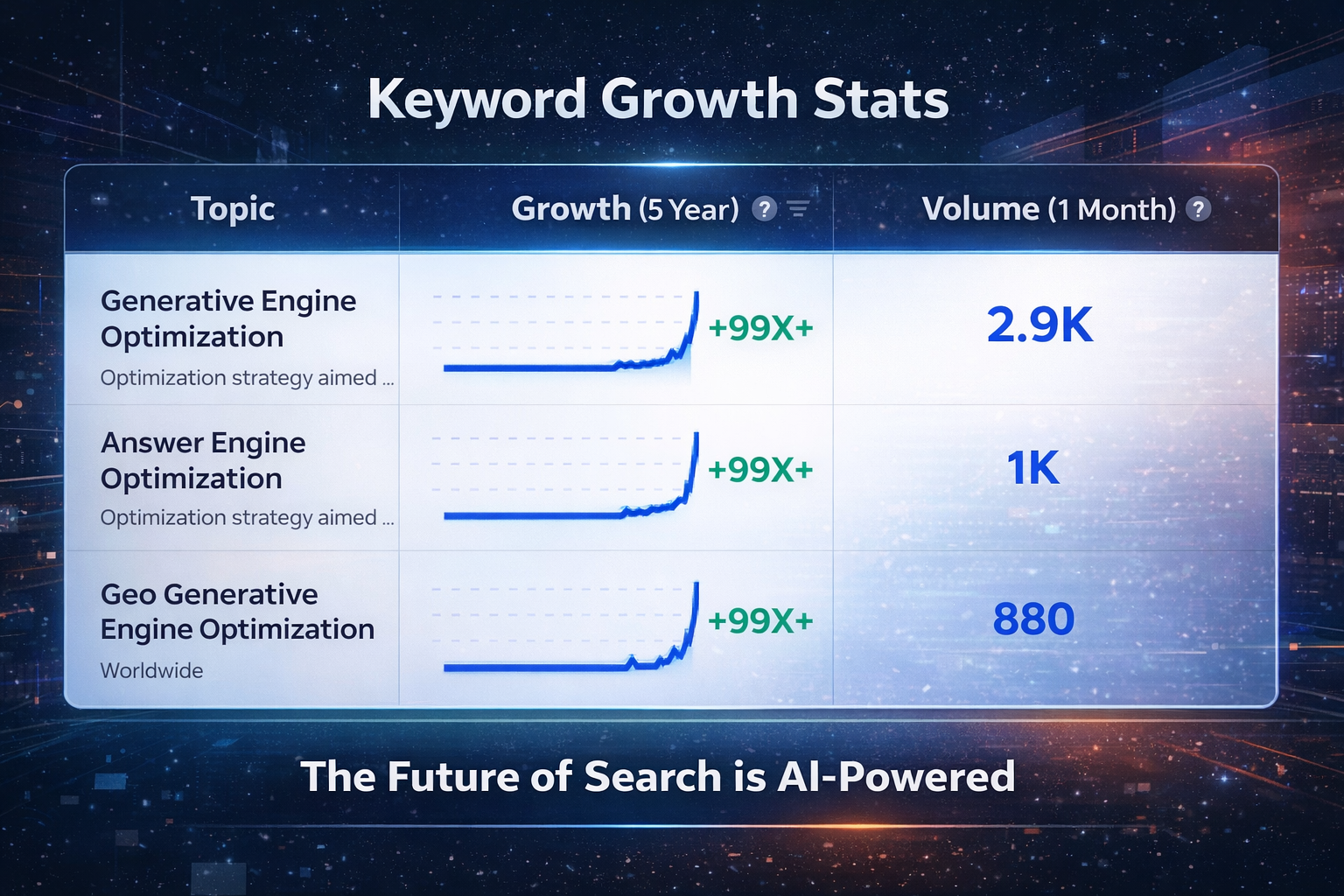
Searchin in internet has entered a new phase. For years, visibility meant ranking higher than competitors on search engine results pages. Today, users increasingly interact with AI systems that generate answers directly—often without displaying traditional search results at all. This shift has fundamentally changed how information is discovered, consumed, and trusted.
AI-powered search tools analyze vast datasets, synthesize insights, and present summarized answers in a conversational format. In this environment, being “ranked” is no longer enough. What matters is whether your content is selected, trusted, and reused by AI systems when they generate responses.
Generative Engine Optimization (GEO) focuses on this new reality. Rather than competing for clicks, GEO helps position your content as the source behind AI answers. This guide explains what GEO is, how it works, why it matters now, and how to build a strategy that aligns with the future of search.
1. What Is Generative Engine Optimization (GEO)?
Generative Engine Optimization (GEO) is the practice of optimizing content so that AI-driven search systems can easily understand, trust, and incorporate it into generated answers.
Unlike traditional search engines that list ranked pages, generative engines interpret intent, analyze context, and synthesize responses from multiple sources. GEO ensures your content is structured and written in a way that allows AI systems to extract accurate insights confidently.
At its core, GEO answers three key questions:
- Can the AI clearly understand what this content explains?
- Does the content demonstrate sufficient depth and accuracy to be trusted?
- Is the information structured so it can be reused in an answer?
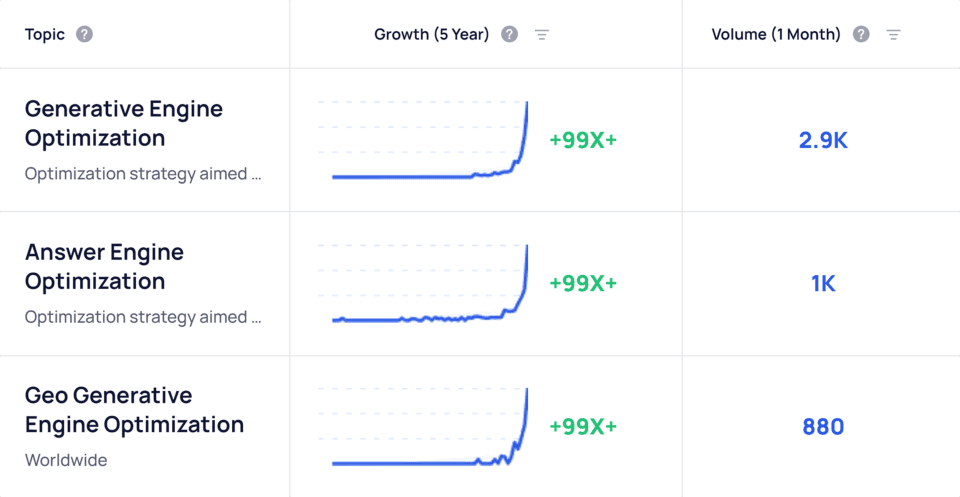
Rather than targeting isolated keywords, GEO prioritizes meaning, context, and completeness. It builds on SEO foundations but adapts content for AI-driven discovery, making it a long-term visibility strategy rather than a short-term tactic.
2. GEO vs Traditional SEO: How Optimization Has Evolved
Traditional SEO and GEO serve different discovery models.
Traditional SEO focuses on ranking pages through keyword optimization, backlinks, technical performance, and click-through rates. Success is measured by position and traffic.
GEO focuses on inclusion within AI-generated answers. Instead of rankings, it emphasizes semantic clarity, topical authority, and trust signals. A page that ranks well may still be ignored by AI if it does not explain a topic clearly or comprehensively.
SEO answers the question “How do I rank?” GEO answers “How do I become the source AI uses to answer questions?”
The most effective strategies combine both approaches—SEO ensures discoverability, while GEO ensures relevance in AI-generated responses.
3. Why Generative Engine Optimization Matters Now
AI-powered search experiences are rapidly becoming mainstream. Users increasingly expect instant answers rather than browsing multiple pages.
This shift creates new challenges such as fewer organic clicks, increased competition for AI citations, and reduced visibility for content not optimized for AI comprehension.
GEO matters because it protects your visibility in environments where users no longer click links but still rely on trusted sources. Brands that adapt now gain a compounding advantage, while those relying only on traditional SEO risk being excluded from AI-driven discovery.
4. How AI Search Engines Interpret and Generate Answers
AI search engines do not rank pages—they synthesize information.
When a user submits a query, AI systems interpret intent, identify relevant concepts, evaluate authoritative explanations, extract key insights, and generate a unified response.
Content that performs well in AI search answers questions directly, uses structured headings, provides definitions and examples, and avoids ambiguity or filler.
5. Core Pillars of Generative Engine Optimization
Content Clarity and Structure
AI systems process content hierarchically. Clear headings, short paragraphs, and logical progression improve interpretability and reuse.
Topic Depth and Coverage
AI prefers sources that fully explain a subject. Covering definitions, applications, implications, and related concepts strengthens authority.
Semantic Relevance
Meaning matters more than keyword density. Using related concepts and contextual explanations helps AI understand topic relationships.
Trust and Credibility
Accuracy, consistency, and expert-level insights build confidence in your content as a reliable source.
Freshness and Updates
Updated content signals relevance and improves the likelihood of being selected in AI-generated answers.
6. GEO Content Strategy: Writing for AI and Humans
Effective GEO content balances human readability with machine clarity.
- Write in natural, conversational language
- Answer key questions early
- Use summaries and bullet points
- Provide examples to reinforce understanding
Each section should stand on its own, as AI systems often extract partial content rather than entire pages.
7. Technical Foundations That Support GEO
Strong technical foundations ensure AI systems can access and interpret content properly.
- Clean HTML and proper heading hierarchy
- Fast load times and mobile responsiveness
- Crawlable pages without unnecessary restrictions
- Consistent URLs and content versions
8. Building Authority Signals for AI Trust
AI engines prioritize sources that demonstrate authority over time.
- Comprehensive topic coverage
- Consistency across related content
- Demonstrated expertise and insight
- Long-term publishing credibility
9. Content Formats That Perform Best in AI Search
- In-Depth Guides – Comprehensive guides provide enough context for AI to confidently reuse explanations and insights.
- Definitions and Explainers – Clear explanations help AI answer conceptual and educational queries accurately.
- Step-by-Step Tutorials – Structured processes allow AI to reconstruct workflows logically.
- FAQ Sections With Direct Answers – These closely match conversational AI query formats.
- Comparison Content – Balanced evaluations help AI generate neutral, decision-oriented answers.
10. Measuring GEO Success
- Presence in AI Answers – Track whether your content appears in AI-generated responses.
- Brand Mentions – Repeated mentions indicate authority and trust.
- Topic Coverage – Visibility across related queries signals semantic strength.
- User Engagement – Engagement from AI-driven traffic reinforces content quality.
11. Common GEO Mistakes to Avoid
- Writing for keywords instead of meaning
- Publishing shallow content
- Ignoring structure and readability
- Over-optimizing for rankings alone
- Failing to update content
12. The Future of GEO and AI Search
The role of Generative Engine Optimization will continue to grow as AI search becomes the primary way users access information. Instead of acting as an add-on to traditional search, AI-driven systems are increasingly becoming the main interface for asking questions, exploring topics, and making decisions online. This shift means that GEO will move from an optional strategy to a core requirement for long-term digital visibility.
In the coming years, AI engines will place greater emphasis on entity authority. Brands, businesses, and individuals that are clearly defined and consistently represented across the web will be trusted more than fragmented or unclear sources. Establishing a strong and recognizable digital identity will play a critical role in determining which sources AI systems rely on when generating answers.
Finally, AI search will increasingly incorporate multimedia elements such as images, videos, and interactive content. AI systems will use multiple formats to enrich responses and provide more complete answers. Content strategies that combine text with relevant visual and interactive elements will be better positioned as AI search experiences become more dynamic and immersive.
As AI search continues to evolve, GEO will become a foundational part of content and visibility strategies. Brands that adapt early will benefit from compounding authority and sustained visibility, while those that delay risk being left out of AI-driven discovery altogether.
Winning in AI Search With Generative Engine Optimization
Generative Engine Optimization represents a permanent shift in how visibility is earned online. As AI systems increasingly shape how users find information, success depends on clarity, authority, and relevance—not just rankings.
By applying GEO principles alongside strong SEO foundations, brands can ensure they remain trusted sources in AI-generated answers. The future of search belongs to those who communicate clearly, structure intelligently, and think beyond traditional optimization.